
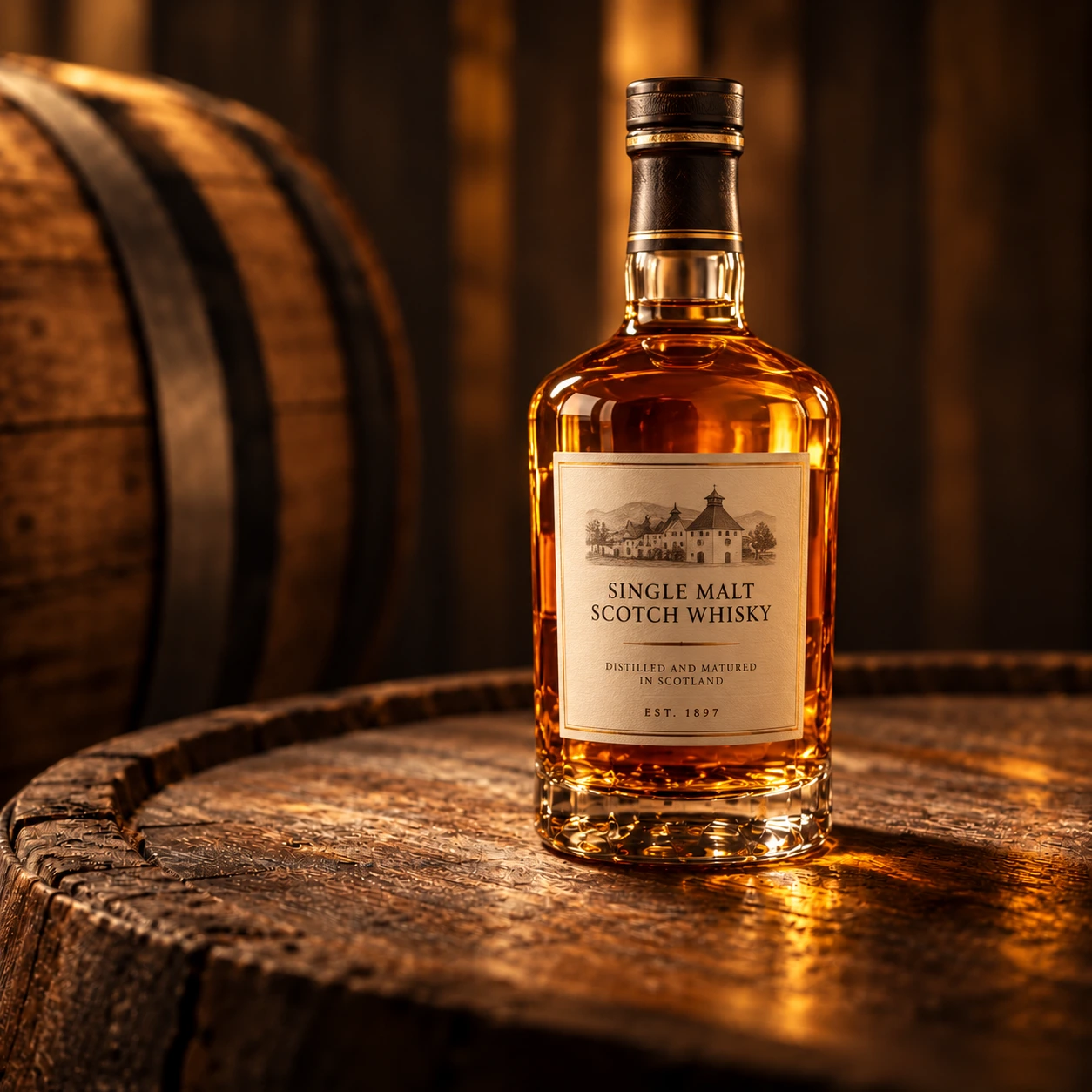
Whisky is one of the world’s most highly regarded spirits, enjoyed across many cultures. Whisky has a history spanning several centuries. Although its exact origins remain debated, Scotland and Ireland are widely considered the birthplace of whisky-making. The earliest Irish records of distilled spirits date back to 1405. Scotland’s first documented record of whisky production dates to 1494. The spirit takes its name from the Gaelic uisce beatha or uisge beatha, meaning “water of life”. Over time, whisky spread across Europe and eventually reached the New World, particularly the United States, where producers developed their own distinctive styles.
What is whisky made from?
Whisky starts with grains such as barley, rye, wheat, or corn. The exact ingredients and production methods vary by style. Malt whisky production begins with malting. Producers soak barley in water to encourage germination, then dry it to stop the process. They then mill the malt to prepare it for mashing. During this stage, they mix the ground grain with warm water, allowing enzymes to convert starches into fermentable sugars. In malt whisky production, this creates a sweet liquid known as wort. Other whisky styles may use unmalted grains and different mashing techniques.
After mashing, producers cool the liquid and transfer it to fermentation tanks, where they add yeast. The yeast converts the sugars into alcohol, producing a fermented liquid commonly known as wash in malt whisky production. Fermentation typically takes several days, though the exact duration varies. Distillation follows, concentrating the alcohol and separating compounds that influence the spirit’s flavour and character. Producers may distil the liquid two or three times in pot stills or use continuous column stills, depending on the type of whisky.
Following distillation, producers transfer the spirit to wooden casks, usually made from oak, where it matures for years, sometimes even decades. During maturation, the whisky interacts with the wood, gradually developing its distinctive flavours, colour, and character. Both the length of maturation and the type of cask have a major influence on the final result. Once maturation is complete, producers may blend the whisky, adjust its strength with water, and filter it before bottling. Some styles also permit limited colour adjustment, depending on local regulations.
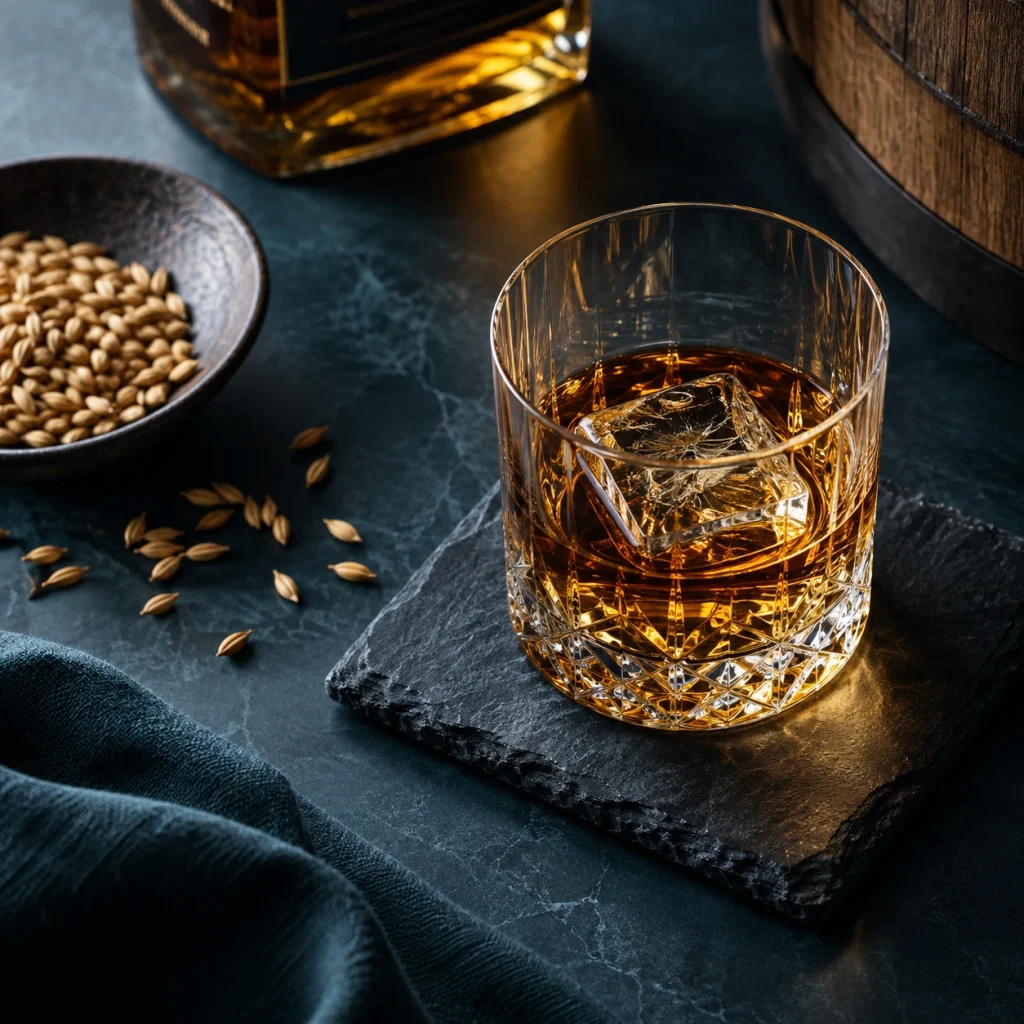
Types of whisky
Most whiskies contain between 40% and 50% alcohol by volume, though special editions and cask-strength bottlings can reach considerably higher levels. During maturation, oak casks contribute a variety of flavour notes, including vanilla, caramel, spices, and fruit. Some whiskies also develop smoky characteristics, often through the use of peat during malt drying. Each whisky’s character depends heavily on its origin, the grains used, production methods, and cask maturation.
The main types of whisky are:
- Scotch Whisky: Scotch whisky, or simply Scotch, must come from Scotland and mature there in oak casks for at least three years. Two of its best-known categories are Single Malt Scotch and Blended Scotch. Single Malt comes from a single distillery and uses only malted barley. Blended Scotch combines one or more single malt and single grain Scotch whiskies.Scotland’s diverse production methods and regional traditions create an impressive range of flavours.
- Irish Whisky: Irish whisky is generally known for its smooth, approachable character, partly thanks to the tradition of triple distillation. However, some producers use double distillation. Different styles use malted barley, unmalted barley, or other grains. Irish whisky must mature in wooden casks for at least three years on the island of Ireland.
- American Whisky: Bourbon stands out among American whiskies. Producers must use a grain mixture containing at least 51% corn and age the spirit in new, charred oak containers. Unlike Straight Bourbon, which requires at least two years of maturation, bourbon has no general minimum ageing period. Another popular variety is Rye Whisky, which must contain at least 51% rye grain under US regulations. It typically offers a spicier, more robust flavour profile.
- Canadian Whisky: Canadian whisky, often called “rye whisky”, has a long tradition of using rye. However, modern expressions may combine several grains and do not necessarily contain a high proportion of rye. Canadian whisky must mature for at least three years in wooden containers. These whiskies tend to be smooth and approachable, with blended styles particularly common.
- Japanese Whisky: Japanese whisky has earned worldwide recognition in recent decades. It draws inspiration from Scottish whisky-making traditions while developing its own identity. Japanese producers pay close attention to every detail, often creating exceptionally refined and elegant whiskies. Modern Japanese industry standards also help distinguish whisky genuinely produced in Japan from blends containing imported spirits.
- Special Types of Whisky: Single Malt and Aged Whiskies
Single Malt whisky holds a special place among whisky enthusiasts. It comes from a single distillery and uses only malted barley, offering a distinctive expression of the producer’s craft. Aged whiskies, including 12-, 18-, and 21-year-old expressions, as well as older bottlings, are particularly prized. An age statement generally refers to the youngest whisky in the bottle, rather than its average age. Extended maturation can bring greater depth and complexity, although age alone does not determine quality.
Interesting facts about whisky
One of the world’s most extravagant whiskies: Isabella’s Islay attracted attention for its luxurious decanter, decorated with white gold, diamonds, and rubies. Its reported price reached an astonishing $6.2 million. However, this was an advertised price, not a verified sale. The whisky remains a luxury curiosity rather than an established record-holder.
The Angel’s Share: During maturation, some alcohol and water naturally evaporate from whisky casks. The liquid slowly escapes through the porous wood, reducing the whisky’s volume each year. This loss averages around 2% annually in Scotland but can be much higher in warmer climates. This natural loss is traditionally known as the “angel’s share”.
One of the world’s largest Scotch whisky collections: Brazilian whisky enthusiast Claive Vidiz spent around 35 years collecting Scotch whisky. His remarkable collection eventually grew to 3,384 bottles. Diageo now owns the collection, which has been on display at The Scotch Whisky Experience in Edinburgh since 2009.
Whisky and celebrities: In literature and film, whisky often symbolises power, luxury, or even melancholy. From Ernest Hemingway to Frank Sinatra, numerous famous figures enjoyed whisky and helped establish its place in popular culture. Sinatra was famously devoted to Jack Daniel’s, and accounts of his funeral suggest that a bottle accompanied him to his grave. In Hungary, the Ewing family—the central characters of the TV series Dallas—also helped popularise whisky, frequently raising a glass on screen.
Whisky and politics: Winston Churchill was famous for his fondness for whisky, often drinking it heavily diluted with water. The drink formed part of the British Prime Minister’s daily routine, particularly during the demanding years of the Second World War. His relationship with alcohol also inspired one of his most famous remarks: “I have taken more out of alcohol than alcohol has taken out of me.”
The most typical whisky cocktails
Although many people prefer whisky neat or over ice, it also forms the basis of several iconic cocktails.
- Old Fashioned: One of the oldest and best-known whisky cocktails, the Old Fashioned combines bourbon or rye whisky with sugar, Angostura bitters, and a little water. Bartenders usually serve it over ice and finish it with orange zest or a slice of orange, sometimes adding a cocktail cherry.
- Whisky Sour: This classic combines bourbon, fresh lemon juice, and sugar syrup, sometimes with egg white for a rich, frothy texture. Bartenders shake the ingredients with ice before straining the drink into a glass. The Whisky Sour strikes a perfect balance between sweet and sour flavours.
- Manhattan: A true classic, the Manhattan blends rye whisky, sweet red vermouth, and Angostura bitters. Bartenders stir the ingredients with ice and usually serve the drink in a chilled cocktail glass, often garnished with a cherry. Its elegant, complex flavour profile has made it a lasting favourite among cocktail enthusiasts.
- Mint Julep: An icon of the American South, the Mint Julep combines bourbon, fresh mint, sugar, and crushed ice. Bartenders traditionally serve it in a metal julep cup, garnished with a sprig of mint. This refreshing cocktail has become closely associated with the Kentucky Derby.
- Rob Roy: The Rob Roy is essentially a Scottish take on the Manhattan, replacing rye whisky with Scotch whisky. It combines Scotch, sweet vermouth, and bitters, usually with a cocktail cherry or citrus garnish. The result is a rich, sophisticated drink whose flavour can range from fruity and mellow to smoky, depending on the whisky used.
Whisky regions
Whisky owes much of its diversity to the different styles and traditions that have developed around the world. Here are some notable whisky-producing regions and the styles that define them.
Europe
- Scotland: Scotch whisky ranks among the world’s most famous spirits. Regions such as Speyside, Islay, the Highlands, and the Lowlands offer an impressive range of flavour profiles, from light, fruity, and smooth to intensely smoky and peaty.
- Ireland: Irish whisky has a reputation for its smooth, approachable character, often associated with the country’s tradition of triple distillation. Producers create a wide variety of styles, including single malts and distinctive single pot still whiskies, the latter traditionally using both malted and unmalted barley.
- England: Although English whisky remains less well known than its Scottish and Irish counterparts, the country has a growing number of quality distilleries. Many experiment with innovative production methods and locally sourced ingredients.
- Sweden: Sweden has gained recognition in the whisky world, particularly through pioneering producers such as Mackmyra, whose financial difficulties in recent years also highlight the challenges facing smaller distilleries. Swedish whisky makers have experimented with local ingredients and distinctive maturation methods, including Swedish oak casks.
- France: France continues to attract attention for its growing whisky industry. One notable example is Armorik Single Malt from Brittany, which draws on the region’s maritime climate and local whisky-making traditions.
- Germany: Whisky production has also expanded across Germany, particularly in Bavaria, where some distilleries draw on local grain varieties and the country’s rich brewing heritage to develop their own distinctive styles.
America
- USA: Bourbon and Tennessee whisky rank among the best-known American styles. Bourbon must contain at least 51% corn in its grain mixture and mature in new, charred oak containers. Tennessee whisky generally follows similar production rules but typically undergoes an additional charcoal-mellowing step known as the Lincoln County Process before maturation.
- Canada: Canadian whisky is often blended and traditionally goes by the name “rye whisky”, although the actual rye content varies. These whiskies are known for their smooth character and frequently combine several grain varieties.
- Brazil: Although Brazil is best known for cachaça, it also has a developing whisky industry, with distilleries such as Lamas producing Brazilian single malt whisky. Some producers experiment with local ingredients and cask types, while the country’s warm climate can accelerate interactions between the spirit and the wood during maturation.
Asia
- Japan: Japanese whisky producers are known for their meticulous attention to detail. They often combine traditional Scottish techniques with modern approaches, creating sophisticated, elegant whiskies with carefully balanced flavours.
- India: India is one of the world’s largest whisky-consuming countries and has also gained international recognition for premium single malts from producers such as Amrut and Paul John. Indian whiskies often offer intense flavour profiles, while the country’s warm climate encourages faster cask interaction and greater evaporation.
- Taiwan: Taiwan has earned international recognition thanks largely to the Kavalan distillery and its award-winning single malt whiskies. The island’s subtropical climate promotes rapid cask interaction, helping create rich, intense flavours even after relatively short maturation periods.
Australia and New Zealand
- Australia and New Zealand: Both countries have developed growing whisky industries, particularly in the premium single malt category. Producers often experiment with locally sourced grains, distinctive casks, and regional maturation conditions, giving their whiskies unique and recognisable flavour profiles. Tasmania has become an especially prominent centre of Australian whisky production.
Africa
- South Africa
South Africa has established a presence in the whisky world, led by producers such as the James Sedgwick Distillery, home to the Three Ships and Bain’s Cape Mountain Whisky brands. Although the distillery’s history dates back to the 19th century, its modern whisky-making tradition developed much later. Local climatic conditions, carefully selected grains, and different cask types contribute to its distinctive whisky styles.
The final note of malt
Whisky is more than just a drink: it’s an experience, a story, and a journey through traditions and flavours. A true adventure for the palate. Whether your glass holds a single malt from the Scottish Highlands, a bourbon from the heart of Kentucky, or a new-wave Japanese whisky, every sip carries a piece of history. The global passion for whisky is not just about preserving traditions but also about constant innovation, ensuring that this remarkable spirit always has something new to offer curious whisky lovers.